ইউ এস বাংলা নিউজ ডেক্স
আরও খবর
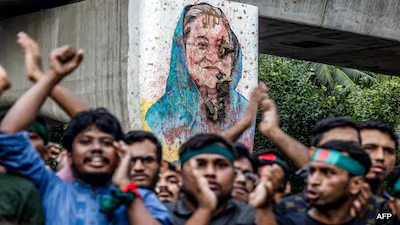
“Highly Inaccurate”: Sheikh Hasina On UN Report On Bangladesh Protest Death Count

17 April: Mujibnagar Day — A Defining Moment in Bangladesh’s Liberation Struggle
Attack on Humanitarian Physician Professor Dr. Kamrul Islam by BNP Leader — Has the Country Become a Safe Haven for Thugs?

How Long Will People Remain Imprisoned Without Trial?
The International Crimes Tribunal Has Turned into a Machine for Illicit Money
Poverty didn’t go to the museum — it went into people’s homes
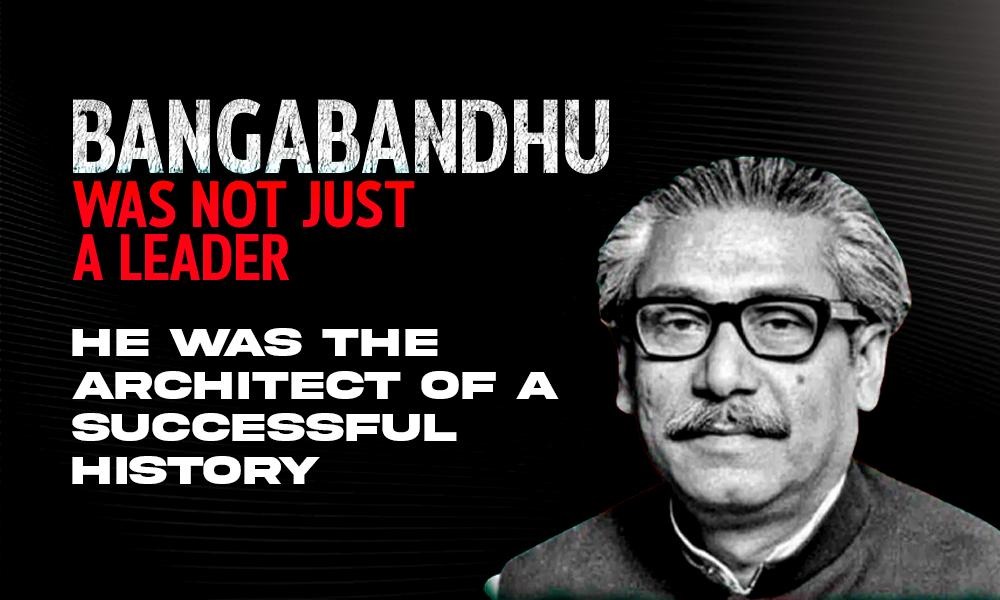
Bangabandhu Was Not Just a Leader – He Was the Architect of a Successful History
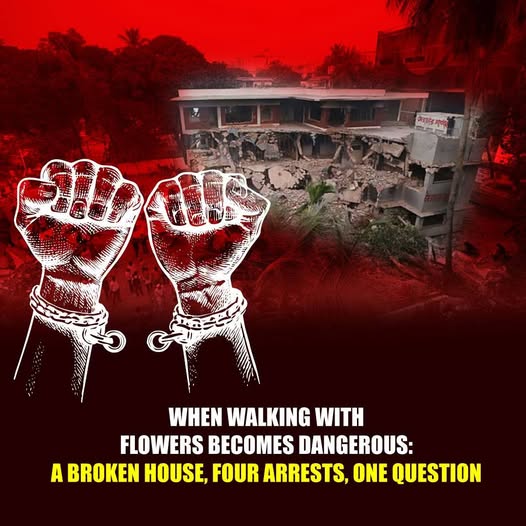
When Walking with Flowers Becomes Dangerous: A Broken House, Four Arrests, One Question
 ইউ এস বাংলা এর সর্বশেষ খবর পেতে Google News ফিডটি অনুসরণ করুন
Imagine you woke up in the morning and went out for a walk. On the road, you saw some fresh flowers and bought a few. Suddenly, the police arrived, arrested you, and charged you under the anti-terrorism law.
No, this is not a scene from a dystopian novel. This is exactly what happened in Dhaka this morning.
Three women and one man were walking toward House No. 32 in Dhanmondi carrying flower garlands. The state has declared them terrorists. The law under which the case has been filed carries a maximum punishment of the death penalty if convicted. Walking with flowers could
now mean death. That is the legal reality currently in place in Bangladesh. The house at No. 32 had already been demolished earlier, in February. When it was torn down, those who carried out the demolition celebrated, made videos, and posted them on social media. It was an open celebration of violence. Yet going to place flowers near that destroyed rubble is now considered terrorism. Could someone explain the logic here? A word must also be said about the March 7 speech. In 2017, UNESCO recognized this speech as part of the world’s documentary heritage. That means the speech has a place
in global history, beyond the likes and dislikes of the Bangladeshi state. In what country is it a crime to lay flowers in memory of the man associated with that day? Under what state philosophy does such an act become illegal? Now let’s come to the February election. What happened on February 12 would require rewriting the definition of the word “election.” The Awami League was banned, the Jatiya Party was effectively non-existent, and the left-wing parties boycotted the process. Among the parties that participated, only the BNP and Jamaat had any real organizational strength. The voter turnout figures that were
announced have not been independently verified. Even those in power know how fragile their claim to a public mandate is. Perhaps it is from that uncertainty that this fear and repression arise. There is also a fundamental truth about the BNP that people repeatedly try to make others forget. The party was born in a military barracks, not through a democratic process. Ziaur Rahman seized power first and then formed the party to legitimize his rule. The instinct to place power above democracy runs in the blood of this party. Those who witnessed the years from 2001 to 2006 remember what
happened: post-election violence against minority communities, bringing Jamaat into the cabinet and allowing war criminals to ride with the national flag on their cars, the operation of a shadow government known as Hawa Bhaban, the rise of Bangla Bhai and Shaykh Abdur Rahman amid state indifference, and the August 21 grenade attack. These are not mere allegations; they are documented history. That same party is now back in power. And one of its first actions has been to arrest people walking with flowers under anti-terrorism laws. Does this sound familiar? Many who once criticized the Awami League and spoke against Sheikh Hasina
are now silent, because criticizing the BNP risks being labeled an “Awami League collaborator.” This binary trap is old and highly effective. But criticizing one government does not mean supporting another. Today four people have been arrested. Tomorrow there will be more. As long as walking with flowers can be called terrorism, this state will not be safe—for anyone.
now mean death. That is the legal reality currently in place in Bangladesh. The house at No. 32 had already been demolished earlier, in February. When it was torn down, those who carried out the demolition celebrated, made videos, and posted them on social media. It was an open celebration of violence. Yet going to place flowers near that destroyed rubble is now considered terrorism. Could someone explain the logic here? A word must also be said about the March 7 speech. In 2017, UNESCO recognized this speech as part of the world’s documentary heritage. That means the speech has a place
in global history, beyond the likes and dislikes of the Bangladeshi state. In what country is it a crime to lay flowers in memory of the man associated with that day? Under what state philosophy does such an act become illegal? Now let’s come to the February election. What happened on February 12 would require rewriting the definition of the word “election.” The Awami League was banned, the Jatiya Party was effectively non-existent, and the left-wing parties boycotted the process. Among the parties that participated, only the BNP and Jamaat had any real organizational strength. The voter turnout figures that were
announced have not been independently verified. Even those in power know how fragile their claim to a public mandate is. Perhaps it is from that uncertainty that this fear and repression arise. There is also a fundamental truth about the BNP that people repeatedly try to make others forget. The party was born in a military barracks, not through a democratic process. Ziaur Rahman seized power first and then formed the party to legitimize his rule. The instinct to place power above democracy runs in the blood of this party. Those who witnessed the years from 2001 to 2006 remember what
happened: post-election violence against minority communities, bringing Jamaat into the cabinet and allowing war criminals to ride with the national flag on their cars, the operation of a shadow government known as Hawa Bhaban, the rise of Bangla Bhai and Shaykh Abdur Rahman amid state indifference, and the August 21 grenade attack. These are not mere allegations; they are documented history. That same party is now back in power. And one of its first actions has been to arrest people walking with flowers under anti-terrorism laws. Does this sound familiar? Many who once criticized the Awami League and spoke against Sheikh Hasina
are now silent, because criticizing the BNP risks being labeled an “Awami League collaborator.” This binary trap is old and highly effective. But criticizing one government does not mean supporting another. Today four people have been arrested. Tomorrow there will be more. As long as walking with flowers can be called terrorism, this state will not be safe—for anyone.

সর্বাধিক পঠিত