ইউ এস বাংলা নিউজ ডেক্স
আরও খবর

How Long Will People Remain Imprisoned Without Trial?

The International Crimes Tribunal Has Turned into a Machine for Illicit Money

When Walking with Flowers Becomes Dangerous: A Broken House, Four Arrests, One Question

Poverty didn’t go to the museum — it went into people’s homes
Bangabandhu Was Not Just a Leader – He Was the Architect of a Successful History

March 1971: From Political Deadlock to Declaration of Independence

Blood on the Streets, Benefits at the Top
Plebiscite or Refounding? The Constitutional Limits of the Referendum in Bangladesh
 ইউ এস বাংলা এর সর্বশেষ খবর পেতে Google News ফিডটি অনুসরণ করুন
On February 12, 127 million Bangladeshis will cast ballots in a parliamentary election. As they elect a new parliament, they will decide, through a national referendum, whether to accept the July Charter. It will be a binary yes-or-no vote on 84 reforms, at least 47 of which amount to explicit constitutional amendments. In effect, the electorate will be asked to approve an overturn of the constitutional order.
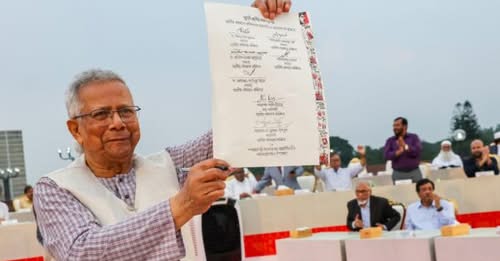
The constitutional validity of the referendum sits in limbo. The Muhammad Yunus-led interim administration, which was put in place after the ouster of Prime Minister Sheikh Hasina on August 5, 2024, defends the process
by invoking “popular sovereignty” and “primary constituent power,” claiming that the people, as the ultimate source of power, may alter even constitutionally unamendable provisions through a plebiscite. At first glance, this appears democratic, but it generates a paradox. If the referendum operates outside the existing Constitution, it is neither an amendment nor a reform, but a refounding of the Constitution itself. There is another juxtaposition. The interim administration has sworn to preserve the Constitution and is organizing elections under its authority, yet simultaneously looking to alter the current constitutional order. The contradiction is lethal. An administration cannot rest on a constitutional foundation
for its legitimacy while denying it. Under the existing constitutional framework, the referendum contravenes Articles 7, Part X, and Article 7B, and is therefore unconstitutional. The Constitutional Architecture of Popular Sovereignty Popular sovereignty is central to participatory democracy, which holds that all political power is vested in and derived from the people. However, it is not unbounded. Article 7(1) affirms that all state power belongs to the people, yet qualifies this by requiring that such power be exercised “only under, and by the authority of, this Constitution.” Doctrinally, this matters because it forecloses the argument that the people may exercise binding sovereign power at
any time, in any form, simply by a plebiscite. Sovereignty is sacred, but so is the integrity and stability of the constitutional order. Therefore, the process to exercise the right to popular sovereignty is juridically organized. Through the phrase “the will of the people” and Part X, the Constitution aims to structure popular sovereignty within constitutional limits. The exercise of constituent power, at whim, further ruptures the constitutional continuity and stability. From this perspective, a referendum is not unconstitutional because it reflects popular will. It becomes constitutionally elusive when it seeks to exercise constituent power outside the channels the Constitution itself prescribes,
while paradoxically intending to operate within the existing order. Article 7(2) also underscores this principle by annulling any “other law” that is inconsistent with the Constitution. If a binding referendum is created or enforced through an ordinance or statute that conflicts with Part X’s amendment scheme or purports to supersede Article 7B, it runs directly into Article 7(2)’s supremacy clause. In addition, democratic theorists have long recognized that constitutional legitimacy rests on informed consent provided through constitutionally specified procedures. Consent must be meaningful and intelligible. Similarly, such informed decisions must be unambiguous. However, the overall lack of understanding of the referendum and its
implications, as evidenced by the general public’s failure to recognize that changes have significant effects, undermines the possibility of informed participation. Where voters fail to comprehend what they are endorsing or rejecting, popular will cannot legitimate constitutional change. Furthermore, the interim government’s active campaign for a “yes” vote also undermines the deliberative process. The Election Commission recently clarified that such an active campaign would breach the administration’s duty of neutrality. Yet, Yunus urged citizens to vote “yes” in the referendum, stating that it would liberate the country from discrimination and oppression; however, he did not clarify how this would be achieved.
The government also promulgated a rule permitting the government service officers to campaign for a “yes” vote. Essentially, the referendum artificially constructs a popular will that does not exist, forcing voters to accept unwanted changes to secure desired reforms or reject desired reforms to prevent unwanted changes. Article 7B: The Explicit Anti-bypass Fortress The most serious doctrinal obstacle lies in Article 7B’s strong protection to preserve the basic structure of the constitution. Inserted through the Fifteenth Amendment in 2011, Article 7B opens with “Notwithstanding anything contained in article 142” and declares specified constitutional domains “not amendable by way of insertion, modification, substitution, repeal, or by any other means.” The final phrase performs critical work by preventing circumvention of entrenchment through alternative mechanisms, including plebiscites. Bangladesh’s codification of the basic structure doctrine is perhaps unique worldwide in recognizing it in an explicit, written, and rigid constitutional form. Unlike India, where the basic structure is judicially crafted, Bangladesh constitutionally codified several unamendable provisions in Article 7B. These include the Preamble, all the provisions of Parts I, II, and III of the Constitution, and all other provisions relating to the basic structure of the Constitution. The rigidity of the Fifteenth Amendment was challenged as being inflexible. The Supreme Court ruled that portions of the amendment were unconstitutional. Yet the legal effect of that judgment depends on formal legislative implementation. Until Parliament acts in accordance with the Constitution, Article 7B remains fully operative. Its effect is two-fold. First, even an amendment passed under Article 142 cannot alter Article 7B-protected domains. Second, a fortiori, a referendum that attempts to bypass Article 7B altogether would be unconstitutional, because Article 7B bars amendment by “any other means.” The July Charter contains several provisions that are in direct conflict with Article 7B’s unamendable provisions. Three examples can be cited. First, the July Charter provides for the mandatory implementation of the 30 reform proposals that shall be “binding” on the next elected government. This limits the Parliament’s legislative autonomy under Article 65, undermining the parliamentary democracy protected in Article 7B. Second, the proposed bicameral legislature with a 100-member upper house elected by proportional representation fundamentally alters the structure of Parliament. The reorganization of legislative power necessarily implicates the separation of powers and democratic governance — principles that constitute part of the Constitution’s basic structure even if not explicitly enumerated. Third, restoring the caretaker government system reverses the Fifteenth Amendment’s abolition of the System and affects executive authority and governance arrangements protected under Article 7B. Conclusion The stakes are high. By passing this referendum, Bangladesh is likely to set another precedent for disregarding the Constitution in times of crisis. While the defenders of the July Charter invoke the expression of the “people’s will,” in a constitutional democracy, the people’s will is exercised within the limits of constitutionalism. It also creates a harmful precedent for future elections, which could drive Bangladesh into a perpetual state of instability. A binding referendum, as currently conceived, would invert the constitutional hierarchy. The new order would essentially override the Constitution. When plebiscites override established legal principles, the Constitution ceases to be the supreme law, and the rule of the majority becomes abusive. Defending constitutional integrity is not opposing reform; it is insisting that popular sovereignty operates through the Constitution, not against it.
by invoking “popular sovereignty” and “primary constituent power,” claiming that the people, as the ultimate source of power, may alter even constitutionally unamendable provisions through a plebiscite. At first glance, this appears democratic, but it generates a paradox. If the referendum operates outside the existing Constitution, it is neither an amendment nor a reform, but a refounding of the Constitution itself. There is another juxtaposition. The interim administration has sworn to preserve the Constitution and is organizing elections under its authority, yet simultaneously looking to alter the current constitutional order. The contradiction is lethal. An administration cannot rest on a constitutional foundation
for its legitimacy while denying it. Under the existing constitutional framework, the referendum contravenes Articles 7, Part X, and Article 7B, and is therefore unconstitutional. The Constitutional Architecture of Popular Sovereignty Popular sovereignty is central to participatory democracy, which holds that all political power is vested in and derived from the people. However, it is not unbounded. Article 7(1) affirms that all state power belongs to the people, yet qualifies this by requiring that such power be exercised “only under, and by the authority of, this Constitution.” Doctrinally, this matters because it forecloses the argument that the people may exercise binding sovereign power at
any time, in any form, simply by a plebiscite. Sovereignty is sacred, but so is the integrity and stability of the constitutional order. Therefore, the process to exercise the right to popular sovereignty is juridically organized. Through the phrase “the will of the people” and Part X, the Constitution aims to structure popular sovereignty within constitutional limits. The exercise of constituent power, at whim, further ruptures the constitutional continuity and stability. From this perspective, a referendum is not unconstitutional because it reflects popular will. It becomes constitutionally elusive when it seeks to exercise constituent power outside the channels the Constitution itself prescribes,
while paradoxically intending to operate within the existing order. Article 7(2) also underscores this principle by annulling any “other law” that is inconsistent with the Constitution. If a binding referendum is created or enforced through an ordinance or statute that conflicts with Part X’s amendment scheme or purports to supersede Article 7B, it runs directly into Article 7(2)’s supremacy clause. In addition, democratic theorists have long recognized that constitutional legitimacy rests on informed consent provided through constitutionally specified procedures. Consent must be meaningful and intelligible. Similarly, such informed decisions must be unambiguous. However, the overall lack of understanding of the referendum and its
implications, as evidenced by the general public’s failure to recognize that changes have significant effects, undermines the possibility of informed participation. Where voters fail to comprehend what they are endorsing or rejecting, popular will cannot legitimate constitutional change. Furthermore, the interim government’s active campaign for a “yes” vote also undermines the deliberative process. The Election Commission recently clarified that such an active campaign would breach the administration’s duty of neutrality. Yet, Yunus urged citizens to vote “yes” in the referendum, stating that it would liberate the country from discrimination and oppression; however, he did not clarify how this would be achieved.
The government also promulgated a rule permitting the government service officers to campaign for a “yes” vote. Essentially, the referendum artificially constructs a popular will that does not exist, forcing voters to accept unwanted changes to secure desired reforms or reject desired reforms to prevent unwanted changes. Article 7B: The Explicit Anti-bypass Fortress The most serious doctrinal obstacle lies in Article 7B’s strong protection to preserve the basic structure of the constitution. Inserted through the Fifteenth Amendment in 2011, Article 7B opens with “Notwithstanding anything contained in article 142” and declares specified constitutional domains “not amendable by way of insertion, modification, substitution, repeal, or by any other means.” The final phrase performs critical work by preventing circumvention of entrenchment through alternative mechanisms, including plebiscites. Bangladesh’s codification of the basic structure doctrine is perhaps unique worldwide in recognizing it in an explicit, written, and rigid constitutional form. Unlike India, where the basic structure is judicially crafted, Bangladesh constitutionally codified several unamendable provisions in Article 7B. These include the Preamble, all the provisions of Parts I, II, and III of the Constitution, and all other provisions relating to the basic structure of the Constitution. The rigidity of the Fifteenth Amendment was challenged as being inflexible. The Supreme Court ruled that portions of the amendment were unconstitutional. Yet the legal effect of that judgment depends on formal legislative implementation. Until Parliament acts in accordance with the Constitution, Article 7B remains fully operative. Its effect is two-fold. First, even an amendment passed under Article 142 cannot alter Article 7B-protected domains. Second, a fortiori, a referendum that attempts to bypass Article 7B altogether would be unconstitutional, because Article 7B bars amendment by “any other means.” The July Charter contains several provisions that are in direct conflict with Article 7B’s unamendable provisions. Three examples can be cited. First, the July Charter provides for the mandatory implementation of the 30 reform proposals that shall be “binding” on the next elected government. This limits the Parliament’s legislative autonomy under Article 65, undermining the parliamentary democracy protected in Article 7B. Second, the proposed bicameral legislature with a 100-member upper house elected by proportional representation fundamentally alters the structure of Parliament. The reorganization of legislative power necessarily implicates the separation of powers and democratic governance — principles that constitute part of the Constitution’s basic structure even if not explicitly enumerated. Third, restoring the caretaker government system reverses the Fifteenth Amendment’s abolition of the System and affects executive authority and governance arrangements protected under Article 7B. Conclusion The stakes are high. By passing this referendum, Bangladesh is likely to set another precedent for disregarding the Constitution in times of crisis. While the defenders of the July Charter invoke the expression of the “people’s will,” in a constitutional democracy, the people’s will is exercised within the limits of constitutionalism. It also creates a harmful precedent for future elections, which could drive Bangladesh into a perpetual state of instability. A binding referendum, as currently conceived, would invert the constitutional hierarchy. The new order would essentially override the Constitution. When plebiscites override established legal principles, the Constitution ceases to be the supreme law, and the rule of the majority becomes abusive. Defending constitutional integrity is not opposing reform; it is insisting that popular sovereignty operates through the Constitution, not against it.

সর্বাধিক পঠিত
এক্স নিয়ে মাহির ভিডিও পোস্ট!
‘দুর্নীতির বরপুত্র’ সারওয়ার কানাডা পালিয়েছেন
নিউইয়র্কে বিএনপি-জামাতকে রুখে দিল সাংস্কৃতিক কর্মীরা
মমতাকে কাশ্মীরে যাওয়ার আমন্ত্রণ ওমরের
নিউইয়র্কে ক্লাবে বন্দুকধারীর গুলি, নিহত ৩
ট্রাম্প-জেলেনস্কির বৈঠকে যোগ দিচ্ছেন জার্মানি ও ইইউ নেতারাও
বাংলাদেশের আমদানির ঘোষণায় চালের দাম বাড়লো ভারতে